

The Common App Activities List has ten slots and 150 characters each. Most students use them to describe what they did. The ones who stand out use them to show who they are. This sprint is the difference between those two outcomes.
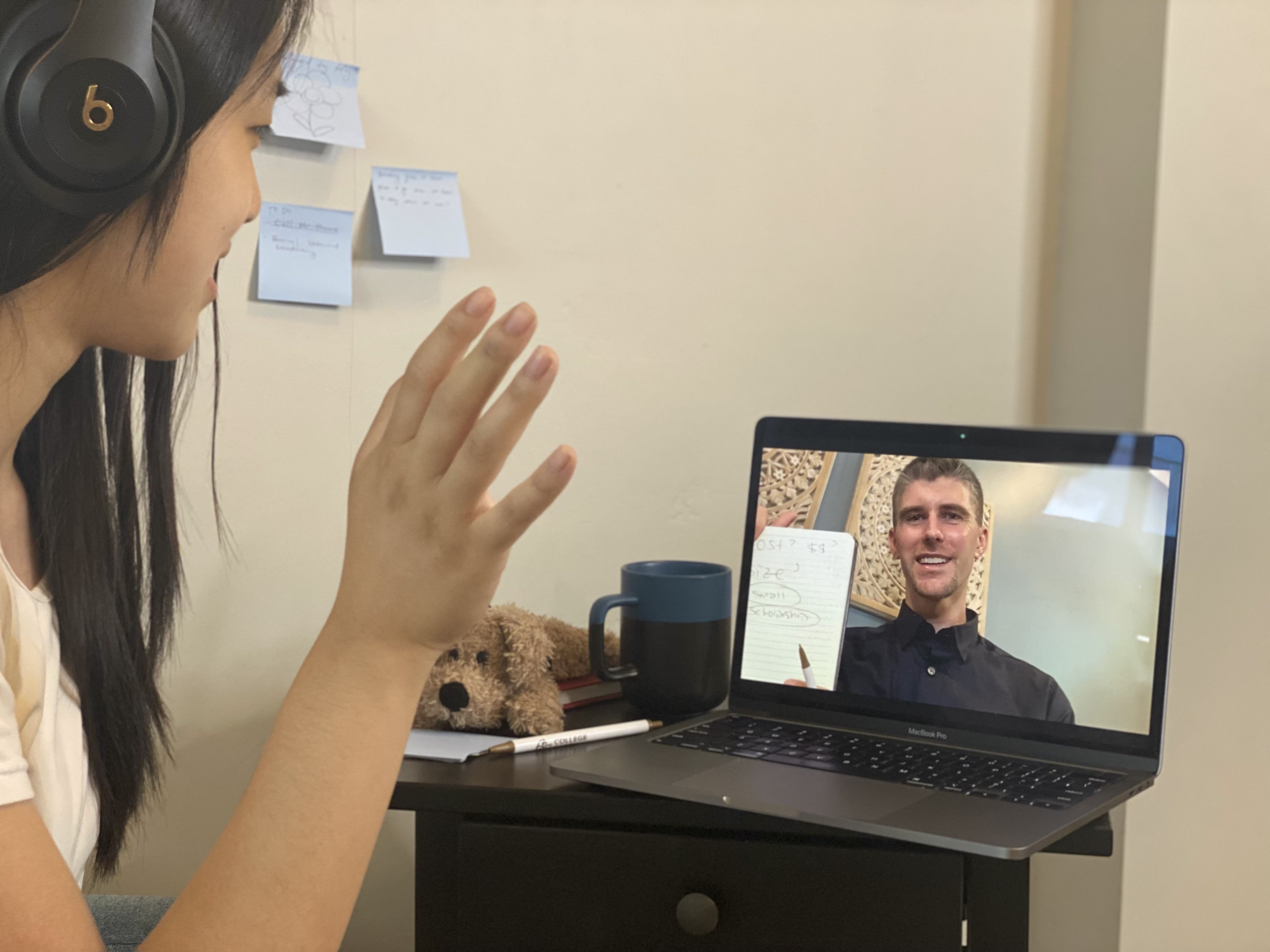

"For the activities list, Robert gave thorough instruction and was really helpful. From beginning to end, Robert was always available, encouraging, knew what to do, and was just overall the ideal person to help you through this process."
Jaclyn N. · College Torch Luminary

Every student I have worked with had more to show on the Activities List than they thought they did. The challenge is almost never a lack of meaningful experiences. It is the blank text field, which has a way of producing the most generic possible description of whatever someone has actually done, whether the field holds 150 characters on the Common App or 350 on the UC Application. The Showcase Sprint is how we fix that before you submit.
The Challenge
The activities section of any college application is read by every admissions reader at every school your teen applies to. On the Common App, that means ten slots with 150 characters each. On the UC Application, it is up to twenty slots across six categories with 350 characters per description, plus extra boxes in three of those categories. Both applications are read carefully. Both reward the same thing: specific, honest descriptions that tell a reader something the activity name alone cannot convey.
The default is to describe the activity. The varsity tennis player writes "played varsity tennis." The club founder writes "founded a community service club." The research intern writes "conducted research at a university lab." These descriptions are technically accurate and nearly impossible to remember, because they tell the reader nothing that the activity name did not already say.
The Showcase Sprint is specifically about fixing that, across whichever applications your teen is submitting. Every slot gets examined. Every description gets rewritten at the full character opportunity available. Every sequencing decision gets made deliberately.
Same student. Same activities. The UC App description comes first at 350 chars, then gets cut for Common App at 150.
What the Sprint Covers
Before a single word gets written, Robert conducts a full inventory of everything your teen has done. Not just the official activities, but the part-time jobs, the informal commitments, the things they've been doing for years without thinking of them as activities, and the experiences that don't have a club or organization attached to them. Students almost always leave this conversation with more to put on the list than they arrived with.
Discovery · Inventory · Nothing Left OutRobert drafts every description at the full character opportunity available: 350 characters per entry on the UC Application, 150 on the Common App. For students doing both applications, he drafts at the UC limit first, then cuts for Common App, so nothing useful gets lost. That limit, whatever it is, is a genuine craft challenge. Robert approaches it the way a good editor approaches a headline: every word has to earn its place. The student reviews, adjusts, and approves.
350 or 150 Characters · Specific · EarnedBoth applications display activities in a fixed order that readers follow top to bottom. On the UC Application, that sequencing happens within six named categories. On the Common App, all ten slots read in one continuous list. Most students enter activities in whatever order they thought of them. Robert evaluates the full list and recommends a deliberate sequence: what leads each section, what comes next to deepen the picture, and how the whole list reads as a coherent view of one person.
Order · Category Strategy · First ImpressionsHow the Sprint Works
Before Session 1, your teen completes the Dazzling Activities course, which covers both the Common App and UC Application in full. Session 1 is a deep live inventory with Robert. Between sessions, Robert does the drafting work. Session 2 reviews, refines, and finalizes. Spotlight students may use a third session to finalize the UC Application sections after the Common App descriptions are locked. Nothing gets submitted until your teen has approved every word.
Robert goes through everything your teen has done, asking specific questions about each activity: how long, how many hours, what leadership was held, what was accomplished, and what is genuinely interesting about it that the name alone doesn't convey. Students regularly surface experiences they had forgotten about or undervalued. This session is conducted with the student only, without parents present, because students speak more freely about their experiences that way.
Robert drafts all descriptions and determines the recommended sequence. For Spotlight students, UC Application descriptions come first at 350 characters, and Common App descriptions are then cut from that work rather than written from scratch. This produces stronger Common App entries because the longer UC draft forces out more specific detail than the 150-character limit alone would. Where a slot is genuinely thin, Robert will say so. The draft is sent before Session 2 with time for your teen to review it first.
Session 2 walks through every slot together. Your teen responds to the drafts: what is accurate, what needs adjusting, what sounds like them and what doesn't. Robert refines in real time and delivers a final, complete, copy-paste-ready Activities List. Everything is approved by the student before it goes into the application. Parents are welcome to join this session.
What You Receive
At the end of the sprint, your teen has a complete, finalized Curated Activities Profile for every application they are submitting. For Common App students, that means all ten slots filled and sequenced. For Spotlight students doing both applications, it means a UC Application section with 350-character descriptions across the relevant categories and a Common App section cut from that work. Additional Information sections on both applications are also covered. Everything is delivered as clean documents ready to copy directly into the applications, approved word by word by your teen. Alongside the finished profile, Robert delivers a brief Activities Strategy Notes document explaining the key choices made: why certain activities were sequenced first, why specific language was used for individual entries, and how to discuss any entry in an interview or additional information section. Students who later have alumni interviews or scholarship interviews find this document useful as a preparation reference..
"For the activities list, Robert gave thorough instruction and was really helpful. From beginning to the end he was always available, encouraging, and knew exactly what to do."
Jaclyn N. · College Torch Luminary
Required Pre-Work
Every Showcase Sprint includes lifetime access to Dazzling Activities, College Torch's on-demand course that covers both the Common App and UC Application activities sections in full. Completing it before Session 1 is required. It covers the 150-character Common App descriptions, the 350-character UC Application descriptions, the six UC Application categories, the extra boxes that pop up in three of those categories, and the Additional Information sections on both applications. When your teen arrives, Robert already knows they understand how both systems work.
Students who have completed the course arrive to Session 1 already thinking about their activities critically: they have already started identifying which entries are strong, which are thin, and what the 150-character limit actually demands. That preparation makes the inventory session faster and more useful.

Your Activities Editor
Writing a 150-character description of something meaningful is a specific skill, and it is not one that high school students are taught. The challenge is not the character limit itself. The challenge is knowing which details to keep when you can only keep a few: what counts as evidence of depth, what constitutes real leadership, and what distinguishes a memorable entry from a generic one.
Robert has worked on hundreds of Activities Lists and developed a clear sense of what makes each slot work. He knows the difference between a description that sounds like it was drafted to impress and one that actually does. He also knows how to find the specific, concrete detail that changes a slot from forgettable to vivid, and how to sequence a full list so that it builds a coherent picture of a real person.
For LGBTQ+ students, the Activities section is also an opportunity to show involvement with identity-affirming communities, advocacy work, and organizations in ways that are entirely voluntary and can be a genuine asset at the right schools. Robert brings that lens to every Showcase Sprint where it is relevant.
From the Luminaries
"Robert helped me with my college research so that I would apply to a school that fitted me best. He also connected me with the proper resources to help strengthen my application. For the activities list, he gave thorough instruction and was really helpful. From beginning to the end, Robert was always available, encouraging, knew what to do and how to help, and was just overall the ideal individual to help you through this process. I am definitely happy with my decision to work with Robert."
"Robert helped me create a consistent schedule that allowed me to completely finish applications to over ten schools. He was very encouraging and helpful, but also taught me to be independent and work on my own. I became a better writer and had a much better understanding of the college application process."

"He was there from day one, when I first began to work on my college and activities lists. Having that head start helped immensely. Robert genuinely cared about my success and made himself available for any questions or concerns I had, no matter how small."
"Robert pushed me to finish essays early, keep up with my activities sheet, and create a college list, things my freshman self would have never imagined me doing so far in advance. He truly cares about every single one of his students and notices when you are experiencing a block, and actually does something about it."
The Sprint
Choose the tier that matches the applications your teen is submitting. Both tiers include the Dazzling Activities course and Robert's personal drafting work. The scope is what changes.
Right for students not applying to any UC schools.
Right for California students applying to UCs and Common App schools. Also right for students applying only to UC schools, even without Common App.
When to Start
The Showcase Sprint is designed for students in application season: seniors filling out the Common App, the UC Application, or both. The UC Application deadline is typically November 30th; the Common App has Early Action and Early Decision deadlines in November and Regular Decision deadlines in January. Starting earlier gives more room to do the work well.
The Common App opens August 1st and the UC Application opens in August as well, with a November 30th deadline. Starting the sprint in August or September means the activities sections are finished before essay pressure peaks in October. Your teen can submit Early Action and Early Decision applications in November and the UC Application before November 30th with all activity sections polished well in advance.
Many Early Decision and Early Action deadlines fall November 1st and 15th. Starting in October is workable with consistent scheduling. Robert will prioritize the activities most relevant to the schools with the nearest deadlines. The sprint is shorter and more focused at this stage, which can be an advantage when time is genuinely short.
Students who have already submitted early applications and are working on Regular Decision schools in November or December can still get full value from the sprint. The Activities List is the same for every application, so completing it well at this stage improves every remaining submission. Sessions are scheduled tightly to match the deadline calendar.
The Showcase Sprint is about presenting the profile that already exists. If your teen still has time to build the profile, the Well-Rounded Warrior Sprint is designed for exactly that. Students in 9th, 10th, or 11th grade who want to be deliberate about how they spend their remaining time before application season should start there instead.
Common Questions
Enroll
Questions before enrolling? Email Robert and he will help you figure out whether this is the right sprint for your teen right now.